The Dan Voiculesulescu Foundation for the Development of Romania launches the first national study exploring the psychological and neurocognitive profile of high potential young people in Romania. It is a first for Central and Eastern Europe and one of the few of its kind in the world.
The study "The neurocognitive pattern of Romanian excellence " is conducted in partnership with the BrainMap Institute.
Purpose of the study: This research aims to provide a completely new, scientifically based perspective on the way young Romanian high achievers function mentally, emotionally and cognitively. Through an integrated research approach, we aim to define for the first time a comprehensive scientific profile of Romania's high potential young people.
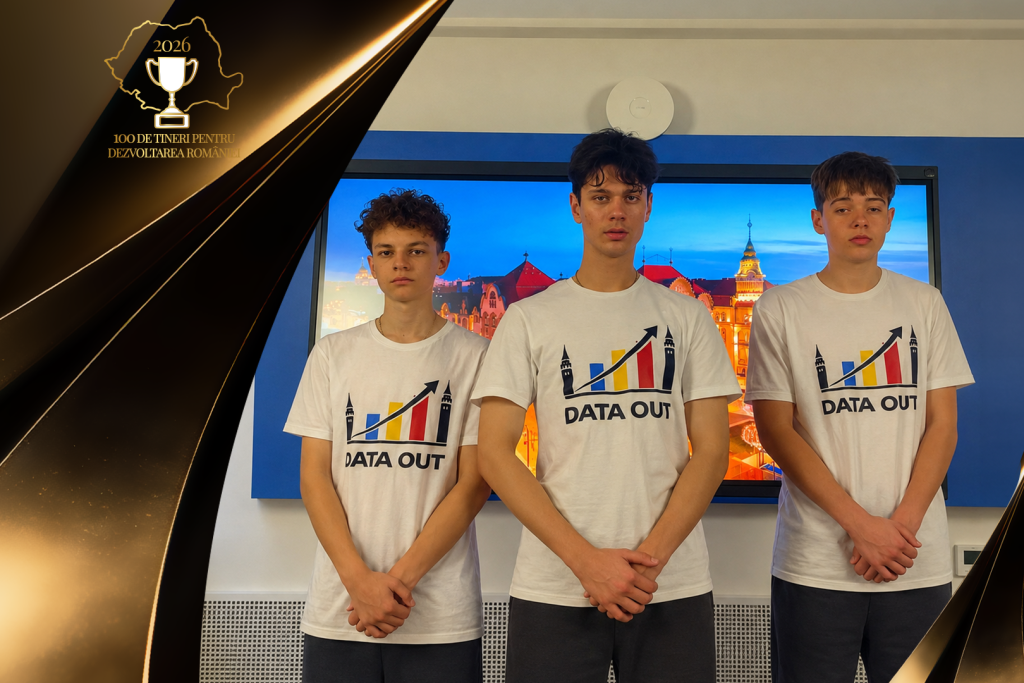
Subjects of the study: the study participants include students and teenagers from the "100 Youngsters for Romania's Development campaign", young people recognized for their consistent achievements in areas such as science, art, technology, creativity, leadership or innovation.
These are not just gifted children in the traditional definition, but young people with validated performances in real-life contexts: competitions, projects, creation, research, social or technological activities. They represent a category rarely studied at national and international level, because their excellence is not reduced to a single score or IQ, but manifests itself in complex, dynamic and multidimensional ways.
What's new: Internationally, about 3-5% of young people are considered "high potential", according to UNESCO data, but only a small proportion of them benefit from programs tailored to their cognitive and emotional needs. In Romania, experts estimate that more than 150,000 children could fit into this category, but the education system lacks the scientific tools to correctly identify them.
The international research conducted so far in Europe, America and Asia is limited and is either strictly theoretical, based on literature reviews, or focuses only on children with very high intellectual abilities, without neurophysiological assessments and without correlation with demonstrated excellence in real life. Even where neuroimaging is used, the focus lies on intellectual giftedness, not on socially or educationally validated performance.
The absolute innovation of the study "The neurocognitive pattern of Romanian excellence" is the integration of psychology, neurosciences and cognitive evaluations in a single model directly applied on young people with real performance. With this study, Romania becomes a pioneer in Central and Eastern Europe, introducing a completely new, objective and multidimensional approach to high potential.
Methodology: So far in Romania, the evaluation of high potential young people has focused almost exclusively on standardized assessments, school results, school awards, academic skills, subjectively observed and described talent. Existing studies mainly use IQ tests, academic assessments or standard psychological measures, without analyzing in depth the neurocognitive and emotional mechanisms underlying excellence. While valuable, these methods do not provide a complete understanding of the internal neurocognitive mechanisms that underpin performance.
The study "The neurocogognitive pattern of Romanian excellence" completely changes the research paradigm. For the first time, high potential is analyzed multidimensionally at the psychological, cognitive and neurophysiological levels to understand what differentiates these young people not only by their results, but by the way their minds and brains actually work.
The methodology includes a complex neurophysiological assessment based on qualitative and quantitative electroencephalography (qEEG - quantitative electroencephalography), which measures the brain's electrical activity and analyzes how different cortical regions work together. This method allows functional mapping of the brain and precise identification of patterns of neuronal activity, providing an objective picture of how the brain processes information, manages emotions and coordinates behavior.
On top of this is a computerized psychological report, obtained through a non-invasive neuropsychological measurement that assesses how the brain and nervous system react to cognitive and emotional stimuli. It analyzes the following parameters: personality analysis, analysis of cognitive intelligence potential, analysis of emotional intelligence potential, analysis of general psychological indicators.
Results: The study aims to identify the common factors that differentiate these young people and explain their excellence, whether it is the way they process information, the way they regulate their emotions or the mechanisms by which they maintain their motivation and resilience. The results can be turned into tailored educational programs, support protocols for high-potential children and tools for teachers, psychologists and educational institutions.
Implementation period: the project will run from November 2025 to September 2026, covering the stages of participant selection, psychological and neurocognitive assessment, data analysis and formulation of final conclusions.