Fundația Dan Voiculescu pentru Dezvoltarea României, în parteneriat cu Institutul BrainMap, lansează Tiparul Neurocognitiv al Excelenței Românești – primul studiu național care explorează profilul psihologic și neurocognitiv al tinerilor cu potențial înalt din România. Este o premieră pentru Europa Centrală și de Est și una dintre puținele cercetări de acest tip din lume.
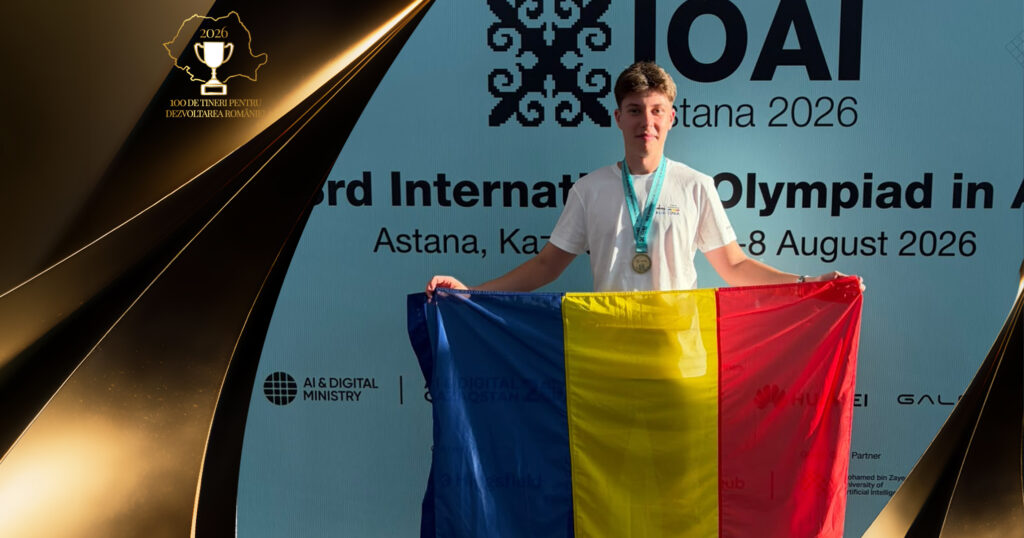
The project begins with some essential questions: what are the characteristics of the brain of a young person with high potential? How is peak performance formed, what cognitive and emotional mechanisms support it and how can it be sustained? The study includes young people from the "100 Youngsters for Romania's Development" campaign run by the Dan Voiculescu Foundation for the Development of Romania - students and teenagers who have distinguished themselves through exceptional achievements in science, art, innovation, leadership or technology.
In Romania, so far, high-ability young people have been assessed almost exclusively through grades, IQ tests or academic awards. No program has looked in depth at how the different cortical regions of the brain work together or how young high potentials process information, react emotionally or manage stress and motivation. The new study completely shifts this paradigm. The research combines methods from applied psychology and neuroscience, providing an objective picture of the cognitive and emotional functioning of high-potential young people.
The study comes at a time when research on cognitive performance is gaining global importance. Internationally, about 3-5% of young people are considered "high potential", according to UNESCO data, but only a small proportion of them benefit from programs tailored to their cognitive and emotional needs. In Romania, experts estimate that over 150,000 children could fall into this category, but the education system does not have the scientific tools to correctly identify them.
Similar research is currently being conducted at Johns Hopkins University - Center for Talented Youth (USA), Erasmus University (The Netherlands) and Gifted Research & Outreach (USA). The key difference is that the Romanian study is not limited to intellectual giftedness, but analyzes socially and educationally validated excellence, while integrating neurophysiological data obtained by modern technologies such as brain mapping.
The results will enable a comprehensive scientific profile of high-potential young people, explaining how creative thinking, memory, speed of information processing and emotional resilience combine. The analysis will also provide insights into how stress, motivation and cognitive styles influence performance and social adjustment.
The anonymized data will be analyzed to extract patterns and common factors of sustained performance and will be published in a report for the education community, the scientific community and policy makers.
The research has a double stake: educational and scientific. With this project, Romania becomes one of the few countries that approaches excellence as a psychological and neurocognitive process, not just as an academic result. The partnership between the Dan Voiculescu Foundation for the Development of Romania and the BrainMap Institute opens a new chapter in the research of human potential in our country, a strategic direction for the future of education, science and development of Romania.