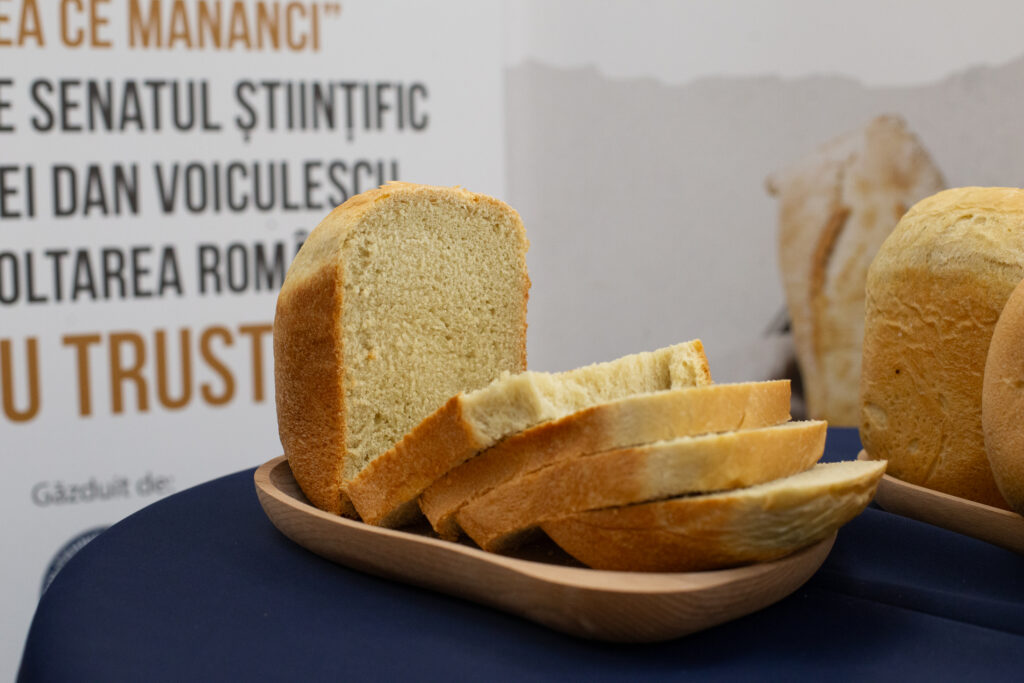
The Scientific Senate of the Dan Voiculescu Foundation for the Development of Romania presented "the bread that rejuvenates us", an innovative product containing flavonoids, natural compounds recognised for their antioxidant properties. This foodstuff provides a novel perspective on daily nutrition by retaining the familiar taste of classic bread whilst concurrently offering important benefits for cellular health and supporting the body's regeneration processes. The product under discussion can be categorised as both a functional food and a nutraceutical, on account of its therapeutic potential.
This innovation is the result of a research project within the Inovaliment programme, which was carried out by Bogdan Păcularu, a fellow of The Scientific Senate. Păcularu managed to integrate flavonoids into a traditional bread recipe. The researcher posits that the presence of these compounds is instrumental in the reduction of oxidative stress, a pivotal factor in the process of premature ageing.
The formula was designed to provide a real health benefit without compromising the sensory qualities of the product. One of the major research challenges was to maintain the effectiveness of flavonoids during ripening. The team was able to stabilize these compounds in complex biochemical structures so that they retain their antioxidant effect even at high temperatures. Based on this technical solution, a patent application has been filed with the State Office for Inventions and Trademarks (OSIM).
Despite the absence of any discernible visual or gustatory disparities in comparison with conventional bread, this product offers substantial advantages with respect to the promotion of general well-being. Regular consumption has been demonstrated to support skin elasticity and appearance, the functioning of the cardiovascular system, and cognitive processes such as memory and concentration.
Statistical data demonstrate that the mean monthly consumption of bread by the average Romanian citizen is in excess of 7 kilograms. At the European level, the recommended daily intake of cereal products is 200-300 grams. It is evident from the available data that bread has been identified by researchers as an optimal medium for the introduction of an ancillary benefit to the prevailing dietary regime. Rather than eradicating this foodstuff from the diet, it is possible to transform it into a health-promoting agent.
The Scientific Senate's initiative proposes a smart and accessible approach to nutrition: you don't need to radically change your eating habits to adopt a healthier lifestyle for a longer life.